After more than a century of being labeled an “incurable disease,” groundbreaking new research reveals that an Alzheimer’s damaged brain may actually have a real chance at recovery. Furthermore, proactive early prevention, achieved through micronutrient supplementation, brain function support, and slowing down neurodegeneration is now viewed as a highly practical solution to safeguard mental capacity from an early stage.
An alarming global burden: Dementia
According to the World Health Organization (WHO), more than 55 million people worldwide are currently living with dementia, with Alzheimer’s disease accounting for approximately 60% to 70% of those cases.
The WHO projects this figure could surge to roughly 78 million by 2030 and exceed 139 million by 2050. The Alzheimer’s Disease International (ADI) warns that the mortality burden associated with Alzheimer’s is escalating rapidly, forecasting that dementia will become the third leading cause of death globally by 2040.
In Vietnam, an estimated 600,000 individuals are currently living with dementia, a statistic expected to climb continuously alongside an aging population. Dementia causes patients to suffer from memory loss and a decreased ability to independently manage daily activities, while placing an immense burden on families and society.

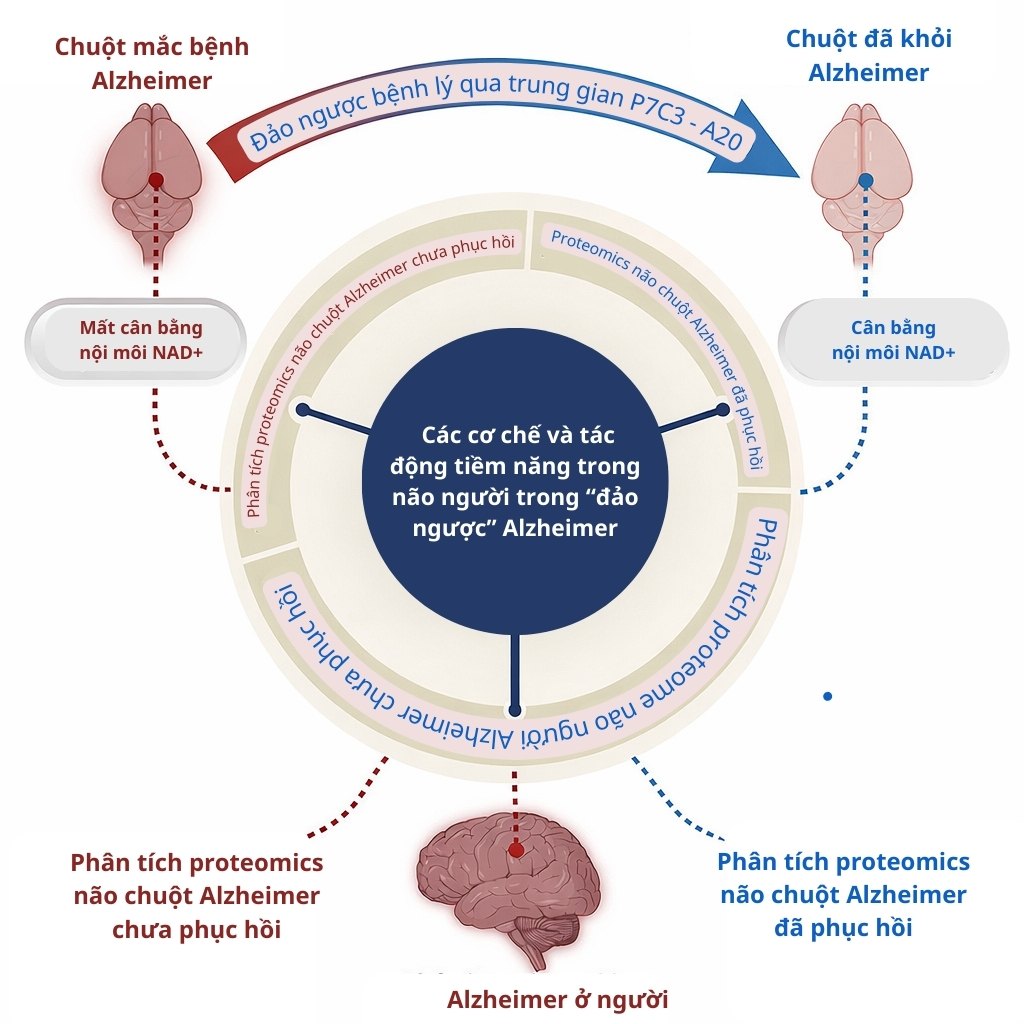
NAD+ successfully “reverses” Alzheimer’s in mice: New hope for advanced-stage patients
Current treatment modalities for Alzheimer’s primarily aim to delay disease progression and manage symptoms. However, the latest study titled “Pharmacologic reversal of advanced Alzheimer’s disease in mice and identification of potential therapeutic nodes in human brain” (published in December 2025) highlights a critical insight: The root cause of Alzheimer’s lies in the severe energy depletion of brain cells.
According to the study, NAD+ is an essential coenzyme found in every living cell that helps regulate vital cellular functions, such as anti-aging processes, maintaining immune health, and repairing DNA. When a shortage of NAD+ occurs, brain cells lose their ability to self-repair and gradually die off.
The most remarkable finding emerged when scientists restored NAD+ balance in animal models with advanced-stage Alzheimer’s, yielding astonishing results:
- Memory restoration: Mice with severe stages of the disease completely regained normal cognitive function and standard memory performance.
- Damage repair: Inflamed brain tissue, damaged nerve fibers, and disruptions in the blood-brain barrier were all miraculously repaired.
- Biomarkers returned to normal: Blood tests indicated that disease biomarkers, such as toxic protein accumulations, had reverted to completely healthy levels.
These successes in animal models are opening a highly promising new chapter in the battle against human Alzheimer’s. Although verification through human clinical trials is still required, this brain-energy-balance approach sparks expectations that extend far beyond the previous goal of merely slowing down Alzheimer’s progression
A parallel approach to brain care: Optimizing the energy environment and protecting nerve cells
In tandem with targeting the NAD+ axis, medical experts recommend supporting the brain through a multi-tiered approach. In this strategy, multiple bioactive compounds are optimized and combined to jointly regulate key processes, generating a synergistic effect in protecting nerve cells.
Cellular energy is directly influenced by oxidative stress, mitochondrial function, and the ability to repair damage at a molecular level. When any of these structural links weaken, the entire nervous system can fall into a prolonged state of imbalance. Consequently, the trend in modern brain care goes far beyond supplementing a single active ingredient, focusing instead on:
- Maintaining stable energy metabolism within the mitochondria – the energy powerhouses of cells – to help nerve cells function endurantly.
- Reducing oxidative stress and chronic neuroinflammation, which are subtle factors driving brain degeneration.
- Protecting neural structures and connections, thereby preserving the integrity of axons and synapses (the junctions between nerve cells).
- Supporting cellular self-repair and recovery mechanisms, allowing the brain to better adapt to aging and metabolic pressures.
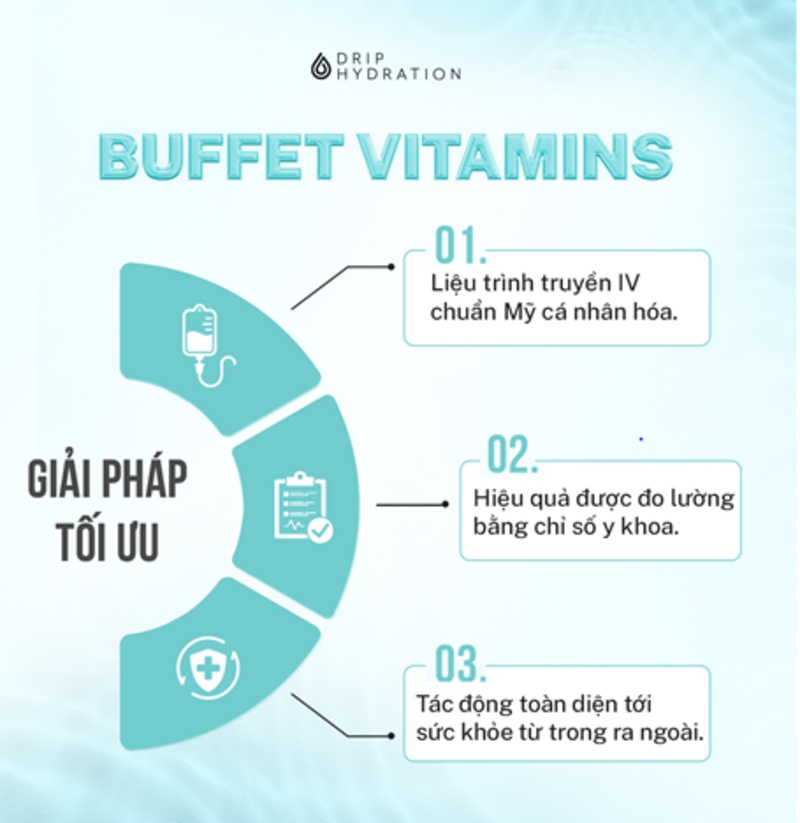
Taking a holistic and comprehensive approach, Drip Hydration continuously expands its vitamin supplementation protocols, combining them with various compounds that enhance energy metabolism, fight oxidation, and protect the nervous system within the Brain Power IV Drip. This is viewed as a form of clinical application designed to help sustain mental clarity and peak cognitive performance over time.
Targeted clinical indications include:
- Individuals at risk for or currently undergoing treatment for Alzheimer’s or Parkinson’s disease.
- People experiencing vestibular disorders, frequent headaches, dizziness, or erratic sleep patterns.
- Individuals suffering from memory decline due to post-COVID complications or workplace burnout
Do not wait until memories begin to fade to start taking care of your brain. Proactively protect the “control center” of your body today – ensuring that every passing day remains fulfilling, clear, and sharp.
References:
- Cell Reports Medicine, WHO, Hiệp hội Alzheimer Thế giới (ADI), Bộ Y tế
- https://tytphuongbennghe.medinet.gov.vn/chuyen-muc/sa-sut-tri-tue-cmobile11318-245478.aspx
- https://www.cell.com/cell-reports-medicine/fulltext/S2666-3791(25)00608-1?_returnURL=https%3A%2F%2Flinkinghub.elsevier.com%2Fretrieve%2Fpii%2FS2666379125006081%3Fshowall%3Dtrue
Bài viết của: Biên tập viên Drip Hydration