Tension headache relief does not just stop at taking medication. This is the most common type of headache globally, affecting over 70% of adults at least once in their lifetime. If managed incorrectly, the pain can easily become chronic. This article provides evidence-based, easy-to-apply solutions to help you achieve rapid pain reduction and effectively prevent recurrences.
Why does stress cause headaches?
When you experience psychological stress, the body activates the “fight-or-flight” response, causing muscle groups in the neck, shoulders, and scalp to continuously spasm. This prolonged contraction reduces local blood flow, accumulates inflammatory mediators such as prostaglandins, and stimulates pain receptors in the meninges – resulting in the dull, band-like tightening pain around the head that we commonly call a tension headache.
According to the study “Pain sensitivity mediates the relationship between stress and headache intensity in chronic tension-type headache” published in the Journal of Pain Research in 2014, individuals with high stress levels recorded a headache intensity 2.5 times higher than the low-stress group, monitored across 96 participants for 8 consecutive weeks. The results indicated that pain sensitivity, which is heightened by chronic stress, is the direct bridge between stress and pain intensity.
Tension-type headaches are classified by the World Health Organization (WHO) as the most common headache disorder globally, affecting an estimated 1.9 billion people annually (WHO Headache Disorders Fact Sheet). The characteristic feature that helps distinguish them from migraines is the bilateral symmetrical pain, which does not throb with the heartbeat, and is not accompanied by nausea or severe photophobia (light sensitivity).
Clearly understanding this mechanism is the first step in choosing the right solution: the problem does not lie in the brain but in the body’s stress response, and that is something completely intervenable
Effective tension headache relief methods
To improve tension headaches, applying appropriate intervention methods is highly necessary. Below are simple, easy-to-implement ways that bring clear efficacy in relaxing the nervous system and reducing headache symptoms.
Method 1: Deep breathing techniques and progressive muscle relaxation
Diaphragmatic deep breathing is the fastest way to break the stress – muscle contraction – headache cycle without needing any equipment. The 4-7-8 breathing technique (inhale for 4 seconds, hold breath for 7 seconds, exhale for 8 seconds) helps activate the parasympathetic nervous system, lowers blood cortisol levels, and directly releases spasming muscles in the head, neck, and shoulders. By simply performing 5 – 10 consecutive cycles, many people note a distinct reduction in pain after 10 – 15 minutes.
Combining this with Progressive Muscle Relaxation (PMR) – sequentially tensing and then relaxing each muscle group from the feet up to the head – helps you systematically identify and release accumulated tension. Each session only takes 15 – 20 minutes and can be perfectly performed right at your desk or before bed.
According to the study “Meta-analysis of biofeedback for tension-type headache: Efficacy, specificity, and treatment moderators” by authors Nestoriuc Y., Rief W., and Martin A., published in the Journal of Consulting and Clinical Psychology in 2008, a meta-analysis of 53 clinical trials with thousands of patients showed that relaxation techniques (including PMR and biofeedback) helped reduce headache frequency by up to 46% compared to the non-intervention group, with efficacy maintained stably after 12 months of follow-up.

Method 2: Massaging the head, neck, and shoulders
Relaxation massage is an instant pain relief solution requiring no equipment or experts. Focus on key pressure points: the base of the skull at the back of the neck (the two bone hollows behind the ears), the temples, the midpoint between the eyebrows (Yintang acupoint), and the trapezius muscle area on the shoulders. Use your thumb or index finger to press with moderate force, rotating in circles for 30 – 60 seconds at each point to reduce muscle spasms and increase local blood circulation.
You can also combine this with warm compresses using a warm towel or heating pad on the nape and shoulders to relax the muscles more deeply. Conversely, applying a cold compress to the forehead helps reduce the feeling of tightness and soothes pain receptors in the scalp. Both methods have a physiological basis, and the choice depends on which sensation brings more comfort to each individual.

Method 3: Drinking enough water
Dehydration is a rarely mentioned but highly common cause of tension headaches. When the body lacks water, the brain temporarily loses volume due to the loss of extracellular fluid, stretching the sensitive meninges and causing a dull aching sensation that is easily confused with stress-induced headaches.
According to the study “A randomized trial on the effects of regular water intake in patients with recurrent headaches” published in the journal Family Practice in 2012, a group of patients instructed to drink an additional 1.5 liters of water daily for 12 weeks recorded a statistically significant reduction in headache frequency and intensity compared to the control group, out of 102 trial participants.
The minimum goal is 2 – 2.5 liters of purified water daily, excluding tea, coffee, or sugary drinks. As soon as the pain begins, drink a full glass of water (about 250 – 300 ml) and monitor yourself after 20 – 30 minutes; this is a simple test to see if dehydration is the trigger.

Method 4: Light exercise and muscle stretching
You do not need to hit the gym or engage in high-intensity running for tension headache relief. Just 20 – 30 minutes of brisk walking every day is enough to stimulate the brain to release endorphins, natural endogenous painkillers, while simultaneously lowering the levels of cortisol and adrenaline accumulated from the day’s stress.
In particular, neck and shoulder stretches performed right at your desk every 1 – 2 hours help break the cycle of accumulated muscle contraction. Simple movements such as tilting your head to both sides (holding for 20 – 30 seconds per side), rotating your neck slowly in circles, and stretching the trapezius muscle by gently pulling your head to one side while the opposite hand presses down on the shoulder, all can be done without leaving your chair and deliver clear results if practiced consistently.

Method 5: Improve sleep quality
Sleep deprivation is the strongest and least controlled trigger for recurrent tension headaches. When not getting enough sleep, the central nervous system’s pain tolerance threshold drops significantly, and the body lacks sufficient time to recover the muscle groups tensed during the day. This creates a loop: headaches make it hard to sleep, and poor sleep makes the headaches worse the next day.
Conversely, oversleeping (more than 10 hours) can also cause early morning headaches due to sudden shifts in serotonin and adenosine levels in the brain. The American Academy of Sleep Medicine (AASM) recommends maintaining 7 – 9 hours of sleep per night with consistent bedtimes and wake times, even on weekends, to stabilize circadian rhythms and reduce the frequency of recurrent headaches.

Method 6: Practicing biofeedback and mindfulness meditation
Biofeedback is a medical technique using electronic sensors to record physiological signals such as muscle tone, heart rate, and skin temperature, displaying them directly on a screen so users can learn to consciously regulate responses that are normally completely automatic. This is one of the most strongly proven methods for tension headache relief without using medications.
Also from the aforementioned meta-analysis by Nestoriuc et al. (2008), electromyography (EMG) biofeedback – directly monitoring and adjusting tension in the frontal and cervical muscles – recorded an improvement rate of up to 59% in the treatment group after 8 – 10 weeks of intervention. If you do not have access to professional biofeedback equipment, Mindfulness-Based Stress Reduction (MBSR) is a scientific alternative that can be practiced at home via apps like Headspace, Calm, or Insight Timer.

Method 7: Using painkillers correctly (when necessary)
Over-the-counter painkillers such as ibuprofen, aspirin, or paracetamol (acetaminophen) are effective in managing acute tension headaches if used at the right dose and the right time. The most important principle is not to abuse them: according to guidelines from the European Headache Federation, using painkillers for more than 10 – 15 days per month can lead to medication overuse headaches (MOH), a form of chronic headache that is very difficult to treat.
Practical rule: only use medication when the pain truly affects your ability to work, do not use it for prevention, and consult a doctor if you need to take medication more than twice a week.
Method 8: Intravenous therapy for energy boosting and anti-aging
When tension headaches persist, the body often falls into a state of fatigue, lack of energy, unrefreshing sleep, and cognitive decline. Besides resting and managing stress, properly supplementing micronutrients also helps support the recovery of the nervous system and improves physical condition more effectively.
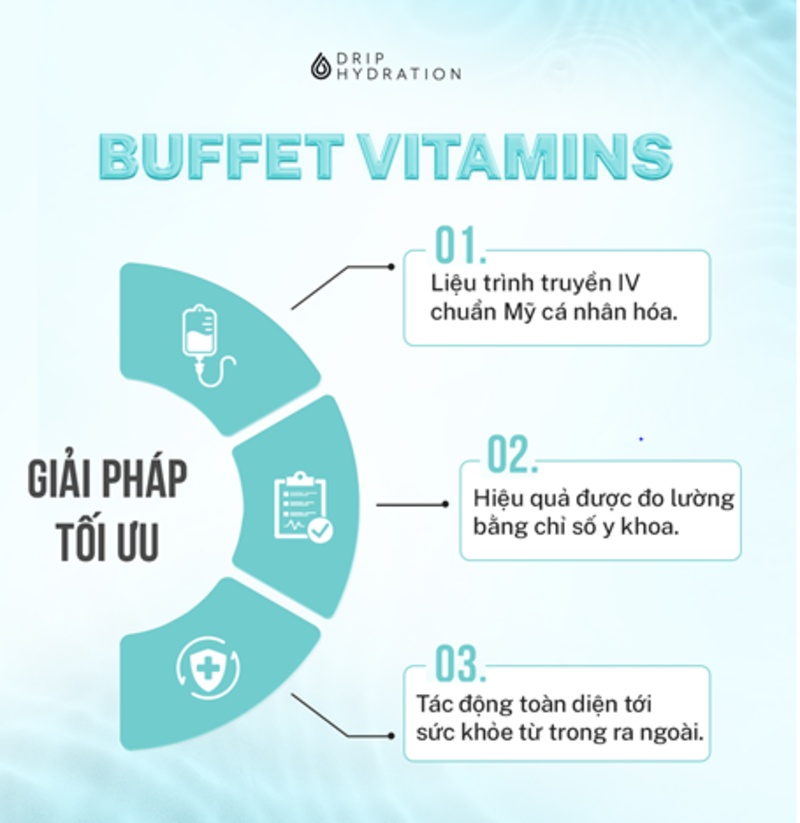
Brain Power Plus – Drip Hydration Vietnam is an IV Therapy regimen that supports mental recovery, boosts brain energy, and reduces oxidative stress according to US standards. The regimen is suitable for those who frequently work under high pressure, experience insomnia, suffer from tension headaches, or feel a prolonged mental “overload”. Contact the hotline 0901885088 or book an appointment immediately to get a consultation from our medical team tailored to your health condition.
5 mistakes that make tension headaches worse
Many people inadvertently exacerbate their condition through seemingly harmless habits.
Drinking too much coffee to stay aler when stressed is the most common mistake. Caffeine can temporarily relieve pain by constricting cerebral blood vessels, but when blood caffeine levels drop, typically after 4 – 6 hours, the blood vessels suddenly dilate, triggering caffeine withdrawal headaches that are even more severe than the original pain.
Sitting with poor posture for long periods, especially looking down at a phone or a low-positioned screen, increases the pressure on the cervical spine and neck muscles by up to 3 – 4 times compared to an upright standing posture, as documented in the study “Assessment of stresses in the cervical spine caused by posture and position of the head” by author Hansraj K.K., published in the journal Surgical Technology International in 2014.
Skipping meals causes a sudden drop in blood sugar (hypoglycemia), an independent headache trigger noted in many neurological studies, often accompanied by fatigue and difficulty concentrating, which is easily confused with pure tension headaches.
Lying in a dark room for too long without moving is sometimes a natural reflex but is unsuitable for tension headaches. Unlike with migraines, passive rest does not resolve the root cause of muscle spasms and sometimes causes muscle groups to stiffen even more after lying in one position for a long time.
Enduring stress alone and failing to seek support is a factor that maintains chronically high cortisol levels, the direct physiological cause of chronic tension headaches. Sharing and talking with loved ones or a psychologist not only reduces emotional stress but also has a measurable impact on inflammation and pain markers in the body.

Advice from medical experts
Neurologists clearly recommend: if your tension headaches occur for more than 15 days per month for at least 3 consecutive months, this is a sign of chronic tension-type headaches requiring a neurological consultation, and you should not self-treat long-term with over-the-counter medications.
Clinical guidelines from the American Headache Society and the European Headache Federation both affirm that the most effective protocol for chronic tension-type headaches (CTTH) is a combination of three pillars: cognitive behavioral therapy (CBT), biofeedback or guided relaxation, and controlled medication management, rather than relying on any single intervention.
If a headache appears suddenly and is unusually severe, accompanied by a high fever, stiff neck, visual disturbances, or weakness/paralysis in the limbs, you must visit a medical facility immediately as this is a sign of a severe neurological emergency, unrelated to normal stress.

The most effective tension headache relief does not lie in a single pill or a single trick, but in a combination of interventions targeting the exact mechanisms: proper breathing to lower cortisol, massage to relax spasming muscles, drinking enough water, getting enough sleep, and exercising to activate the parasympathetic nervous system. These methods not only help reduce pain quickly during acute attacks but also address the physiological root of the problem. Start with one small change today, a 5-minute breathing exercise, a glass of water, or a short walk, and observe the difference over time.
Rererences
- Nestoriuc Y., Rief W., Martin A. (2008). Meta-analysis of biofeedback for tension-type headache: Efficacy, specificity, and treatment moderators. Journal of Consulting and Clinical Psychology, 76(3), 379–396. https://doi.org/10.1037/0022-006X.76.3.379
- Spigt M., Weerkamp N., Troost J., van Schayck C.P., Knottnerus J.A. (2012). A randomized trial on the effects of regular water intake in patients with recurrent headaches. Family Practice, 29(4), 370–375. https://doi.org/10.1093/fampra/cmr112
- Cathcart S., Bhullar N., Immink M., Della Vedova C., Hayball J. (2014). Pain sensitivity mediates the relationship between stress and headache intensity in chronic tension-type headache. Journal of Pain Research, 7, 687–695. https://doi.org/10.2147/JPR.S71007
- Hansraj K.K. (2014). Assessment of stresses in the cervical spine caused by posture and position of the head. Surgical Technology International, 25, 277–279.
- World Health Organization. (2016). Headache disorders – WHO Fact Sheet. https://www.who.int/news-room/fact-sheets/detail/headache-disorders
- American Headache Society. (2019). The American Headache Society Position Statement On Integrating New Migraine Treatments Into Clinical Practice. Headache: The Journal of Head and Face Pain, 59(1), 1–18. https://doi.org/10.1111/head.13456
Bài viết của: Biên tập viên Drip Hydration