Stroke was once considered an “old age disease,” but the latest medical studies demonstrate the opposite: stroke in young adults is rapidly increasing, even within the 15 to 39 age range. Alarmingly, many cases occur in individuals with no clear medical history, making stroke a silent threat in modern lifestyles.
Stroke onset in younger population: a global issue proven by scientific data
According to the study “Global, regional, and national burden and trends of stroke among youths and young adults aged 15 – 39 years” published on the National Institutes of Health (NIH) platform, the global stroke burden among individuals aged 15 – 39 has surged by 36%, reaching 8.72 million cases across 204 countries. This study reveals that stroke in young adults is no longer a regional phenomenon, but a growing global health issue.
Supporting this trend, data from the World Stroke Organization (WSO) shows that out of over 12.2 million new stroke cases globally each year, more than 16% occur in individuals aged 15 – 49. Furthermore, among the 6.5 million annual stroke deaths, over 6% are young adults.
Vietnam records approximately 200,000 stroke cases annually
Citing data presented at medical conferences by the Vietnam Stroke Association, Vietnam records more than 200,000 stroke cases each year. Alarmingly, only about 10% to 20% of patients reach the hospital within the critical “golden window” for effective emergency intervention.
According to statistics from the Stroke Center at Bach Mai Hospital, patients under the age of 45 account for approximately 15% of total admissions. Experts warn that stroke in young adults is continuously rising due to modern lifestyle factors and unmanaged cardiovascular risks.
Neurological specialists classify stroke into two primary forms:
- Ischemic stroke (76% – 80%)
- And hemorrhagic stroke (20% – 24%).
Notably, Vietnam exhibits a higher proportion of hemorrhagic stroke compared to Western countries. Associate Professor Mai Duy Ton, MD, PhD – Director of the Stroke Center at Bach Mai Hospital – highlights that hypertension is associated with nearly 78% of stroke cases. Among younger patient populations, the rate of hemorrhagic stroke can surge up to 46%. Furthermore, silent congenital cerebral vascular malformations remain a leading cause of severe hemorrhagic strokes in young adults.

Modern lifestyles: Driving earlier stroke onset in young adults
According to leading physicians, unhealthy lifestyles are actively driving the earlier onset of stroke:
- Unhealthy diet: High intake of sodium, saturated fats, and ultra-processed foods.
- Physical inactivity: Sedentary behavior and prolonged sitting, combined with chronic stress, significantly elevate cardiovascular and stroke risks.
- Substance use: Smoking and excessive alcohol consumption are primary drivers that damage blood vessels and accelerate early-onset stroke.
Unchecked, these daily habits often lead to early-onset hypertension, dyslipidemia, and diabetes mellitus. Specifically, tobacco smoke contains over 7,000 toxic chemicals. Studies show that approximately 50% of young stroke patients have a history of smoking, which dramatically increases the risk of cerebrovascular damage and arterial rupture.

Unexpected stroke in young adults: Warnings from medical experts
Dr. Nguyen Thi Phuong Nga, MD, Head of the Department of Neurology at Thong Nhat Hospital, emphasizes: “Stroke does not choose a specific time, it is not limited to early mornings or late nights. The most dangerous trigger is sudden temperature changes in individuals with underlying risk factors.”
Medical experts urge the public to follow the FAST protocol for early stroke recognition:
- F (Face): Facial drooping or asymmetry when smiling.
- A (Arm): Arm weakness, numbness, or inability to raise both arms.
- S (Speech): Slurred speech, difficulty speaking, or trouble understanding language.
- T (Time): Time is brain. Call emergency medical services immediately at the first sign of a stroke.
Self-administering unverified “anti-stroke” pills, drinking concentrated lemon juice, or relying on unproven folk remedies can cause patients to lose their critical window for treatment and survival.

Early prevention: Evidence-based lifestyles and proactive healthcare
According to Dr. Nguyen Duc Anh, MD, PhD, Neurosurgeon, stroke risk in young adults can be significantly reduced by:
- Routinely monitoring and controlling blood pressure, blood glucose, and lipid levels.
- Reducing dietary sodium intake while increasing consumption of leafy greens, fruits, and whole grains.
- Maintaining at least 150 minutes of moderate physical activity per week.
- Ensuring adequate rest, managing stress effectively, and maintaining work-life balance.
- Quitting smoking and limiting alcohol consumption to protect vascular health.
Furthermore, amidst occupational stress, environmental pollution, and widespread micronutrient deficiencies, proactive healthcare from within is becoming a modern medical trend to enhance energy, resilience, and immune function.
Proactive healthcare solutions: Preventing illness before it occurs
Instead of waiting for disease to manifest, preventive protocols at Drip Hydration focus on early intervention – helping the body maintain stable energy, boost stamina, and enhance resilience against chronic disease risk factors, including cardiovascular conditions and stroke.
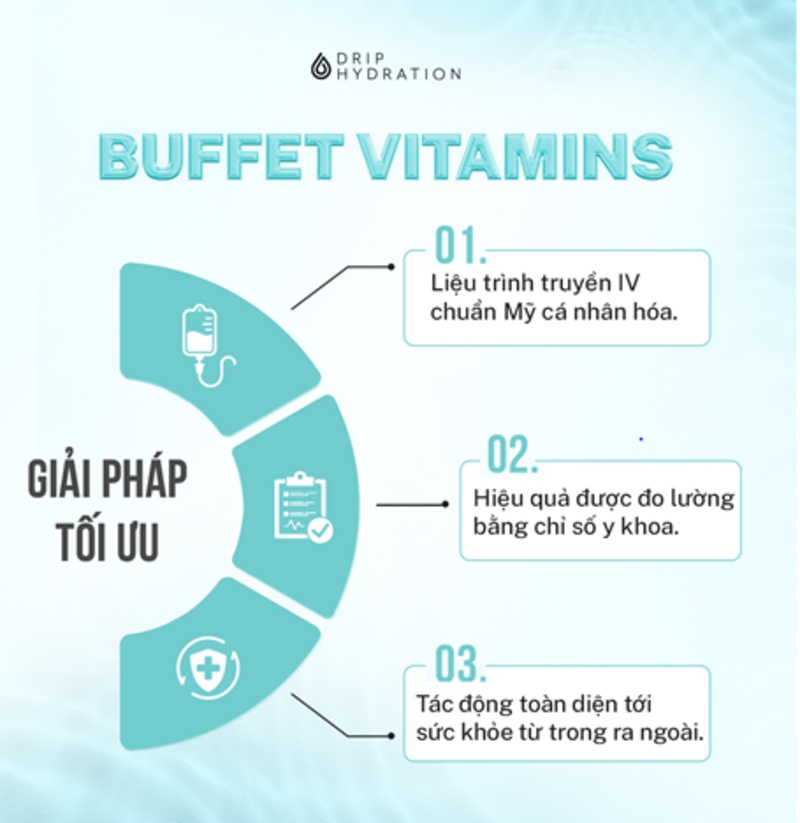
A key feature of Drip Hydration’s approach involves supplementing essential vitamins, minerals, and micronutrients through personalized protocols. This enables the body to efficiently reach optimal nutrient levels to support core biological functions.
When metabolic function is optimized, the body not only maintains mental alertness and physical endurance, but also strengthens the immune system and supports vascular health. This serves as a vital foundation for managing metabolic risks such as hypertension, dyslipidemia, and insulin resistance – the primary underlying factors driving stroke in young adults.
Additionally, experts note that maintaining consistent cellular energy and reducing oxidative stress allows the cardiovascular system to operate more efficiently, helping to minimize vascular wall damage and lower the risk of thrombus formation.
Therefore, practicing proactive healthcare through tailored nutrient supplementation plays an essential role in early disease prevention and overall quality of life. To help you take control of your vascular health, Drip Hydration offers the Stroke Risk Screening and Management Support Program; contact our hotline at 0901.885.088 for personalized consultation.
References:
- https://pmc.ncbi.nlm.nih.gov/articles/PMC11938946/
- https://www.world-stroke.org/assets/downloads/WSO_Global_Stroke_Fact_Sheet.pdf
Bài viết của: Biên tập viên Drip Hydration