ATP (Adenosine Triphosphate) is the primary direct energy source driving all physiological processes, spanning muscle contraction and nerve impulse transmission to protein synthesis and immune function. What exactly is the role of ATP in the body, and what are the most effective ways to optimize cellular production? This article provides an evidence-based analysis of ATP mechanisms and clinical pathways to enhance cellular energy.
Why is ATP considered the cellular “energy currency”?
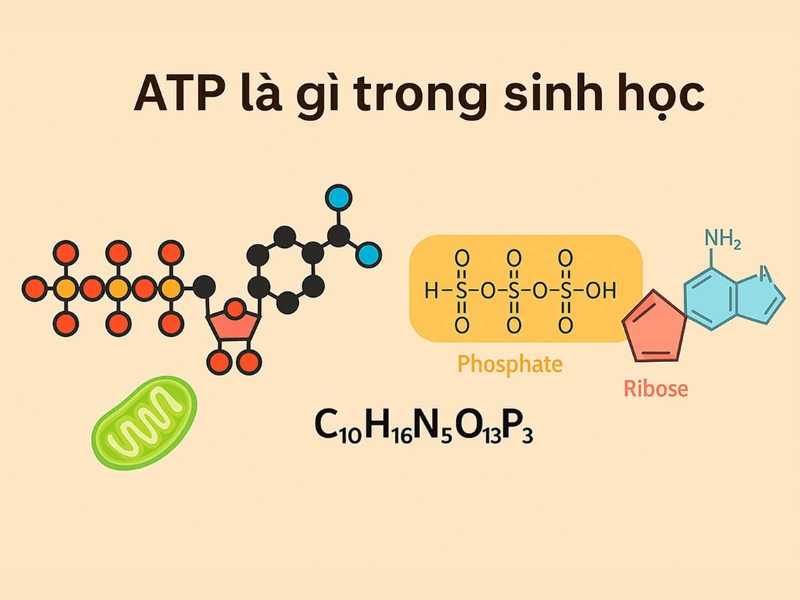
ATP is a nucleotide composed of three core components:
- A nitrogenous base (adenine),
- A five-carbon sugar (ribose),
- And three sequentially linked phosphate groups.
When the body requires energy to execute physiological work, ATP cleaves its terminal phosphate group, converting into ADP (Adenosine Diphosphate). This biochemical cleavage releases a substantial amount of usable energy, enabling cells to perform active work.
The chemical reaction occurs as follows: ATP + H₂O → ADP + Pi + energy
ATP acts as the ultimate cellular energy currency because it represents a standardized format that almost every cell can utilize immediately. Instead of waiting for glucose, fatty acids, or other complex nutrients to undergo multi-step conversions during acute physical demands, cells simply expend ATP to fulfill metabolic needs instantly.
Furthermore, ATP is continuously expended, synthesized, and recycled. Once ATP releases its energy and converts to ADP, the body utilizes food energy to rephosphorylate ADP back into ATP, a process taking place primarily within the mitochondria. This recycling loop runs non-stop at an extraordinary rate. The human body synthesizes an amount of ATP equivalent to its own body weight every single day, highlighting the irreplaceable role of ATP in continuous metabolic maintenance.
5 core aspects highlighting the role of ATP in human physiology
ATP is present within every cell and drives virtually all biological pathways. From cognitive executive function and muscular movement to nutrient transport and tissue repair, every system relies on continuous energy transfer. The following 5 core aspects illustrate the critical role of ATP in sustaining daily performance and homeostatic balance:
1. Fueling muscle contraction and physical stamina
The most physically apparent role of ATP in the body is powering muscular skeletal movement.
For skeletal muscles to contract, actin and myosin filaments must actively slide across one another. This mechanical sliding action requires direct chemical energy from ATP. Every single micro-movement of muscle contraction or relaxation drains your energy reserves.
ATP is rapidly consumed during:
- Walking or running
- Climbing stairs
- Resistance weightlifting
- Competitive sports performance
When the rate of ATP regeneration fails to keep pace with physical demands, the muscular system experiences:
- Acute physical fatigue
- Reduced stamina thresholds
- Distinct muscle weakness
- A sharp drop in athletic output
This metabolic limitation is why elite athletes focus on targeted protocols to maximize mitochondrial efficiency and maintain high baseline energy levels.
2. Driving active transport across cell membranes
To survive, cells must constantly maintain an intracellular environment distinctly different from extracellular fluids. Moving vital molecules against steep concentration gradients requires active transport systems that consume massive amounts of ATP.
A classic example is the sodium-potassium pump (Na+/K+-ATPase). This foundational enzymatic mechanism expends ATP to:
- Extrude sodium ions out of the cell
- Pump potassium ions into the intracellular space
- Maintain resting membrane potentials
- Regulate systemic cellular volume
Without constant ATP availability, neurons lose their capacity to fire, myocardial electrical conduction fails, and osmotic fluid balance collapses, demonstrating the vital role of ATP in basic cell survival.

3. Powering macromolecular biosynthesis (Protein, DNA, RNA)
The human body constantly generates new cells to replace aging, damaged, or apoptotic tissues. To synthesize these massive macromolecules, cells require a continuous stream of ATP.
ATP acts as the primary energy source to:
- Synthesize structural proteins required to build muscle, skin, hair, and connective tissues
- Replicate DNA strands and synthesize RNA molecules for normal cellular growth
- Drive cellular division and proliferation pathways
- Accelerate wound healing and structural tissue regeneration
When cellular energy output drops, synthesis and repair pathways stall, leading to prolonged recovery timelines, sluggish tissue regeneration, impaired immune vigilance, and accelerated systemic aging.
4. Sustaining neurotransmission and cognitive executive functions
Although the human brain accounts for a mere 2% of total body weight, it consumes roughly 20% of resting metabolic energy.
Neurons rely heavily on ATP to:
- Reset electrical membrane potentials after action potentials
- Synthesize and package vital neurotransmitters
- Propagate signals across synaptic networks
- Drive memory consolidation pathways
- Maintain sharp executive focus
When ATP generation flags:
- Individuals experience cognitive decline,
- Impaired memory recall,
- Severe mental exhaustion,
- And prolonged brain fog.
According to a comprehensive clinical review by Gu et al., published in Ageing Research Reviews (2024), accumulating medical evidence demonstrates that mitochondrial dysfunction and compromised ATP synthesis are direct pathological drivers of neurodegenerative diseases, including Alzheimer’s, Parkinson’s, and ALS.

5. Activating and regulating immune system signaling
Beyond basic mechanical and metabolic work, ATP acts as an essential signaling molecule to maintain nervous system alertness and modulate immune responses.
Within the immune network, ATP drives:
- T-lymphocyte and B-cell activation
- Fine-tuning of inflammatory responses
- Pathogen identification and antigen presentation
- Coordination between innate and adaptive immune branches
Immune cells present immense energy demands, especially when actively combatting pathogens or systemic tissue trauma. Therefore, maintaining efficient cellular respiration is a vital cornerstone of a robust, highly responsive immune defense system.
The biological link between ATP depletion, fatigue, and chronic exhaustion
When ATP levels drop, cellular functions across all tissue systems are disrupted, manifesting clinically as chronic fatigue, reduced physical endurance, sleep disruption, and prolonged stress.
Why does mitochondrial damage trigger chronic fatigue syndrome?
Mitochondria are the powerhouse organelles of human cells, executing the Krebs cycle and electron transport chain to synthesize the vast majority of cellular ATP. When mitochondria sustain damage from unmitigated free radicals (oxidative stress), environmental toxins, or advanced aging, their ATP production capacity plummets.
Chronic Fatigue Syndrome (CFS) is strongly correlated with underlying mitochondrial dysfunction; under these clinical conditions, even minor physical activity leaves patients deeply exhausted because cells cannot meet basic energy demands.
Muscle fatigue and acute cramping during high-intensity exercise
When physical exertion exceeds the cardiovascular system’s capacity to deliver oxygen, muscle tissue shifts to anaerobic metabolism. This emergency pathway yields very little ATP while generating lactic acid. The accumulation of lactic acid drops intracellular pH, inhibiting metabolic enzymes.
Concurrently, as local ATP concentrations deplete, calcium pumps on the sarcoplasmic reticulum fail to resequester Ca2+ ions, triggering uncontrolled, painful involuntary contractions (muscle cramps) and profound muscular fatigue.

How chronic stress drains your energy reserves
Prolonged stress hyperactivates the hypothalamic-pituitary-adrenal (HPA) axis, causing a sustained surge in circulating cortisol levels. Long-term cortisol elevation induces insulin resistance and disrupts glucose transport into the mitochondria, effectively choking off the primary raw fuel required for ATP synthesis.
Sleep deprivation and compromised ATP restoration
Sleep is the primary restorative window where the human body repairs cellular structures and recharges energy pools. Sleep deprivation accelerates free radical damage against mitochondrial membranes, disrupting oxidative phosphorylation. This metabolic disruption explains why individuals experience severe sluggishness, low stamina, and chronic midday slumps the following day.
Evidence-based strategies to naturally optimize ATP levels
To safely elevate systemic energy, lifestyle interventions must focus on protecting mitochondrial health and supplying the core cofactors required for ATP synthesis.
1. Adopt a diet rich in coenzyme Q10, L-carnitine, and iron
The mitochondrial electron transport chain relies on specific micronutrients and metabolic cofactors to convert food into ATP. Three foundational compounds include:
- Coenzyme Q10 (CoQ10): A vital electron shuttle within the inner mitochondrial membrane. Without sufficient CoQ10, electron transport stalls, crippling ATP output. Rich sources include grass-fed organ meats, wild-caught salmon, pistachios, and broccoli.
- L-Carnitine: Acts as the primary shuttle transport system moving long-chain fatty acids across mitochondrial membranes for beta-oxidation. It is highly abundant in pasture-raised red meats and quality dairy products.
- Iron: A core structural component of hemoglobin (for systemic oxygen transport) and mitochondrial cytochromes. An iron deficiency halts the entire energy production chain due to cellular hypoxia.
2. Leverage high-intensity exercise to spark mitochondrial biogenesis
According to a landmark review by Gurd et al., published in Seminars in Cell & Developmental Biology (2023), high-intensity exercise protocols strongly activate PGC-1α, the master transcriptional coactivator that triggers mitochondrial biogenesis (the creation of brand-new mitochondria within cells).
Short bursts of high-intensity physical exertion send clear biological stress signals that force muscle cells to generate more power plants. This adaptive cellular shift optimizes overall metabolic efficiency, enhances glucose and fatty acid clearance, and elevates baseline physical stamina.
Integrating structured High-Intensity Interval Training (HIIT) effectively increases muscular mitochondrial density, promoting more efficient ATP recycling. However, overtraining without adequate rest yields opposite results, accelerating oxidative stress and depleting your energy reserves.

3. Secure deep, restorative sleep architecture
During deep sleep cycles (Stage 3 – Non-REM sleep), the body directs its energy toward anabolic pathways and cellular repair. Concurrently, the brain’s glymphatic system flushes out metabolic waste, allowing neurons to replenish depleted ATP stores.
Maintaining a consistent sleep schedule, limiting evening blue-light exposure, avoiding late-day caffeine, and securing 7 to 9 hours of quality sleep are essential requirements to ensure high daytime alertness.
4. Utilize creatine monohydrate to accelerate ATP recycling
Creatine is a naturally occurring compound stored primarily within skeletal muscle as phosphocreatine. When ATP loses a phosphate group during explosive movements, phosphocreatine rapidly donates its phosphate group to convert ADP back into ATP instantly. This phosphagen pathway represents the fastest energy recycling system in human physiology.
According to the official consensus stand of the International Society of Sports Nutrition (ISSN) (2017), a validated creatine protocol involves:
- An initial loading phase of roughly 20 g/day for 5 to 7 days
- A continuous maintenance phase of 3 to 5 g/day afterward
- Alternatively, individuals can directly ingest 3 to 5 g/day; muscle creatine saturation will simply be achieved at a slower, steadier pace.
Creatine supplementation should ideally be coordinated with a clinical nutritionist or healthcare professional.
5. Advanced metabolic optimization via Energy Boost IV therapy
For individuals navigating chronic fatigue syndrome, extreme professional burnout, or recovering from recent debilitating illnesses, oral supplements often fail to provide rapid relief due to intestinal absorption barriers.
The Energy Boost intravenous (IV) micronutrient therapy at Drip Hydration bypasses the digestive tract entirely, delivering a concentrated blend of B-complex vitamins, high-dose vitamin C, and vitamin B6 directly into systemic circulation. These micronutrients act as essential coenzymes driving the Krebs cycle and mitochondrial respiration, rapidly accelerating ATP recycling to alleviate long-term fatigue.
This advanced protocol is highly indicated for corporate executives under intense workloads, individuals managing chronic insomnia, or athletes requiring rapid metabolic recovery. Every protocol is personalized by our licensed medical team based on a comprehensive pre-infusion clinical evaluation.

Understanding the vital role of ATP empowers you to take proactive control of your cellular health, maintain consistent energy, and improve your overall quality of life. If you are battling chronic exhaustion or slow recovery timelines, contact the Drip Hydration medical team today via our hotline at 0901885088 to schedule your comprehensive physician consultation.
References:
- Raichle ME, Gusnard DA. Appraising the Brain’s Energy Budget. Proceedings of the National Academy of Sciences (PNAS). 2002 https://pmc.ncbi.nlm.nih.gov/articles/PMC124895/
- Gu YY, Zhao XR, Zhang N, et al. Mitochondrial dysfunction as a therapeutic strategy for neurodegenerative diseases: Current insights and future directions. Ageing Research Reviews. 2024. https://pubmed.ncbi.nlm.nih.gov/39528070/
- Gurd BJ, Menezes ES, Arhen BB, Islam H. Impacts of altered exercise volume, intensity, and duration on the activation of AMPK and CaMKII and increases in PGC-1α mRNA. Seminars in Cell & Developmental Biology. 2023. ttps://pubmed.ncbi.nlm.nih.gov/35680515/
- Kreider RB, Kalman DS, Antonio J, et al. International Society of Sports Nutrition Position Stand: Safety and Efficacy of Creatine Supplementation in Exercise, Sport, and Medicine. Journal of the International Society of Sports Nutrition. 2017 https://link.springer.com/article/10.1186/s12970-017-0173-z
Bài viết của: Biên tập viên Drip Hydration