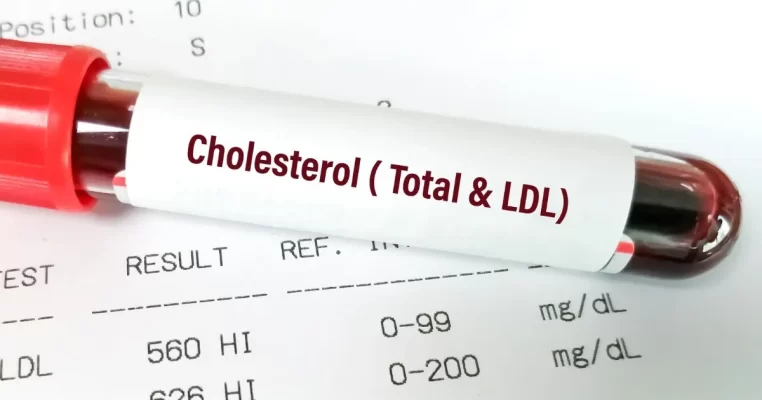
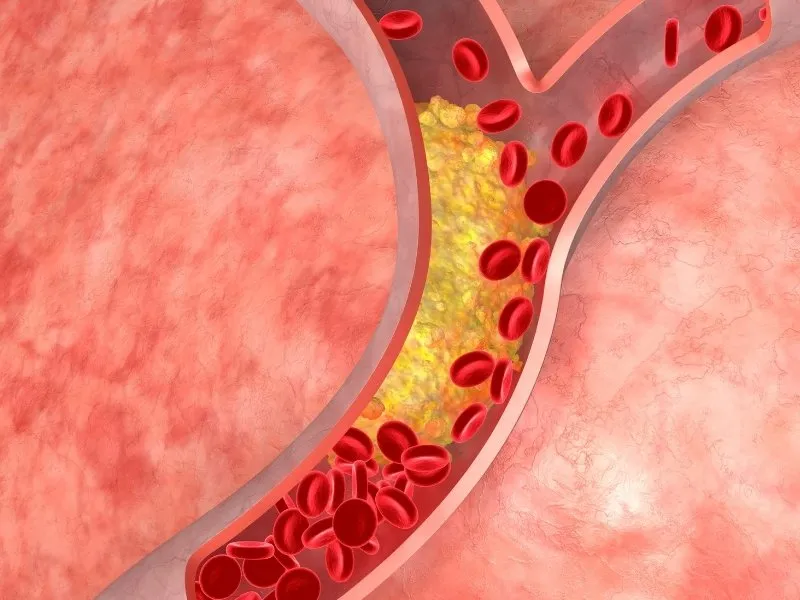
Dyslipidemia, particularly the persistent elevation of atherogenic lipoproteins such as LDL, accelerates the formation of atherosclerotic plaques and increases the risk of thrombotic events, including myocardial infarction and ischemic stroke. Early evaluation and proper cholesterol management for stroke prevention play a vital role in achieving effective, proactive protection.
Blood lipids and stroke: The medical perspective
In the bloodstream, cholesterol and triglycerides are predominantly transported within lipoprotein particles. A standard lipid panel typically measures total cholesterol, LDL-C, HDL-C, and triglycerides; in select cases, non-HDL-C, ApoB, and Lp(a) may also be evaluated for a more comprehensive risk assessment. Specifically:
- LDL-Cholesterol or “Bad Cholesterol”: LDL-C represents the mass of cholesterol carried within low-density lipoprotein particles. When circulating LDL particle concentration remains persistently elevated, these particles are more prone to penetrate and become trapped within the arterial wall, driving the cascade of atherogenesis.
- Triglycerides: Elevated triglycerides are frequently accompanied by an increase in triglyceride-rich lipoproteins and their remnant particles. Several of these remnant particles carry significant cholesterol content and are directly atherogenic. Severe hypertriglyceridemia significantly increases the risk of acute pancreatitis.
- HDL-Cholesterol or “Good Cholesterol”: HDL-C quantifies the cholesterol carried within high-density lipoprotein particles. HDL facilitates reverse cholesterol transport back to the liver; however, an elevated HDL-C level does not inherently equate to absolute cardiovascular protection.
Lipid lowering plays a crucial role in stroke prevention
The scientific study “The role of lipid lowering medications in the primary prevention of cardiovascular disease and mortality: a meta-analysis of randomized controlled trials” (PubMed, 2026) conducted a pooled analysis of 10 randomized controlled trials involving 85,829 participants to evaluate the efficacy of lipid-lowering therapies (primarily statins) in primary prevention among individuals with no prior history of cardiovascular disease or stroke. The findings demonstrated that the use of lipid-lowering pharmacotherapy reduced the risk of stroke or transient ischemic attack by 25% compared to the control group (RR = 0.75; 95% CI).
Furthermore, the study documented a significant reduction in non-fatal cardiovascular events:
- A 36% relative risk reduction in myocardial infarction (RR = 0.64; 95% CI)
- A 30% relative risk reduction in the need for surgical or percutaneous revascularization (RR = 0.70; 95% CI)
- A 25% relative risk reduction in cardiovascular-related hospitalizations (RR = 0.75; 95% CI)
Lowering LDL-C alongside managing concurrent risk factors decelerates atherosclerotic progression, mitigates clinical vascular events, and can contribute to plaque stabilization. High-intensity LDL-lowering therapies can even induce atherosclerotic plaque regression in specific populations.
Notably, a meta-analysis by Jaewon Shin et al. “Achieved low-density lipoprotein cholesterol level and stroke risk: A meta-analysis of 23 randomised trials, PubMed, 2021” further substantiated that for every 1.0 mmol/L (~38.7 mg/dL) reduction in LDL-C, there is a corresponding 23.5% decrease in the overall risk of stroke.
This quantitative evidence serves as the clearest proof of the decisive role that aggressive cholesterol management for stroke prevention plays in curbing acute cerebrovascular events from an early stage.
Risk stratification for dyslipidemia based on age and comorbidities
For effective cholesterol management for stroke prevention, therapeutic strategies do not rely on a “one-size-fits-all” approach. Instead, clinical risk must be stratified based on age, lifestyle factors, and comorbid conditions (blood pressure, lipid profile, diabetes mellitus, chronic kidney disease, personal cardiovascular history, and other risk-enhancing factors).
Validated cardiovascular and stroke risk assessment models (such as the Pooled Cohort Equations, Framingham, SCORE, and PREVENT) generally categorize individuals into distinct risk tiers:
- Moderate-risk category (commonly observed in young adults aged 20 – 40 years): Although age-related vascular degeneration has not yet set in, the prevalence of dyslipidemia in this demographic is rising sharply due to adverse lifestyle factors, including diets high in saturated fats, physical inactivity, tobacco use, and chronic psychological stress. This creates an insidious, early accumulation of atherogenic lipids that induces subclinical endothelial injury.
- High-risk category (individuals aged 45 – 50 years and older): Cardiovascular risk naturally rises with advancing chronological age as vascular elasticity declines, increasing endothelial adhesiveness and accelerating the development of atherosclerotic plaques.
- Very high-risk category (individuals with major comorbidities or genetic predispositions):
- Genetic predisposition: Familial hypercholesterolemia or a premature family history of atherosclerotic cardiovascular disease or stroke in a first-degree relative.
- Concurrent cardiometabolic disorders: Established diabetes mellitus, hypertension, chronic kidney disease, or overweight and obesity.
Accurately identifying one’s risk tier is an indispensable prerequisite for establishing individual target lipid thresholds (chiefly LDL-C). Immediately following risk stratification, individuals must implement comprehensive cholesterol management for stroke prevention to preserve endothelial integrity and achieve long-term vascular protection.
>> Spend 1 minute completing our Stroke Risk Assessment Questionnaire to identify your personalized prevention strategy early. The questionnaire is completely free, and participant data is kept strictly confidential.
Cholesterol management strategies for early stroke prevention
Dyslipidemia is an insidious, chronic progressive condition. Consequently, lifelong cholesterol management for stroke prevention must be maintained continuously and adjusted dynamically in response to each individual’s clinical status and lifestyle.
Multitiered lipid management protocols at Drip Hydration
At Drip Hydration, lipid management is incorporated into our comprehensive Stroke Risk Screening and Management Program. Designed around a multitiered framework, this program integrates clinical assessments, behavioral modifications, and targeted medical interventions to support effective cholesterol management for stroke prevention.
Personalized screening and risk stratification
To acquire an accurate baseline of systemic metabolic and lipid status, our clinical team administers a rigorous diagnostic battery, including:
- Comprehensive lipid panel: Evaluating the four core markers (Total Cholesterol, LDL-C, HDL-C, and Triglycerides) to assess systemic lipid metabolism.
- Functional vascular diagnostics and vascular ultrasound: Carotid and transcranial Doppler ultrasound to directly visualize arterial lumen morphology, detect increased carotid intima-media thickness, and identify early atherosclerotic plaque deposition.
- Clinical history and risk factor profiling: A thorough evaluation of dietary and lifestyle patterns, underlying metabolic disease, hypertension, diabetes mellitus, smoking history, and family genetic predisposition.
Synthesizing data from this comprehensive screening, clinicians stratify the patient’s cerebrovascular risk and establish personalized LDL-C treatment targets:
- Low- to moderate-risk group: Healthy individuals with minimal or no clinical risk factors aim to maintain an LDL-C level below 100 mg/dL, coupled with annual reassessments of the fasting lipid panel and vascular functional health.
- High-risk group: Patients presenting with hypertension, longstanding diabetes mellitus, or severe isolated dyslipidemia require reducing LDL-C to below 70 mg/dL and achieving at least a 50% reduction from baseline levels.
- Very high-risk group: Patients with a history of stroke, myocardial infarction, diabetes with target-organ damage, or chronic kidney disease require aggressive control to suppress LDL-C below 55 mg/dL alongside a minimum 50% reduction from baseline.
Cholesterol control through lifestyle modification: when is pharmacotherapy indicated?
Because circulating lipid parameters fluctuate in response to day-to-day diet and physical activity, therapeutic lifestyle changes serve as the cornerstone of cholesterol management for stroke prevention:
- Evidence-based medical nutrition therapy: Restrict saturated fatty acids to less than 7% of daily caloric intake and strictly eliminate trans-unsaturated fatty acids found in fried foods and ultra-processed items. Increase intake of viscous soluble fiber from oats, leafy greens, and legumes, alongside bioactive plant compounds like phytosterols and gamma-oryzanol to competitively inhibit intestinal cholesterol absorption.
- Physical exercise and healthy habits: Engage in moderate-to-vigorous aerobic exercise such as brisk walking, swimming, or cycling for at least 150 minutes per week to elevate HDL-C and lower triglycerides. Complete smoking cessation is essential to preserve endothelial barrier function, alongside strict control of body weight and waist circumference.
When circulating lipid levels exceed clinical safety thresholds (particularly in the presence of elevated cardiovascular risk, high baseline LDL-C, or cardiometabolic comorbidities) physicians will initiate targeted lipid-lowering pharmacotherapy:
- Statins: Inhibit 3-hydroxy-3-methylglutaryl-coenzyme A reductase to suppress hepatic cholesterol biosynthesis.
- Ezetimibe: Selectively inhibits the Niemann-Pick C1-Like 1 transporter to reduce intestinal cholesterol absorption.
- PCSK9 inhibitors: Indicated for severe refractory hypercholesterolemia or familial hypercholesterolemia.
In specific populations, particularly individuals with established atherosclerotic cardiovascular disease or markedly elevated baseline LDL-C, pharmacotherapy should be initiated promptly in tandem with lifestyle changes. LDL-C-lowering agents have demonstrated definitive efficacy in reducing major adverse cardiovascular events and stroke in appropriate patient cohorts.
Statins represent the foundation of therapy across most clinical guidelines; adjunctive agents are selected based on achieved LDL-C values and global cardiovascular risk.
Irrespective of pharmacotherapy status, maintaining evidence-based lifestyle habits remains essential to protect endothelial integrity, improve arterial compliance, and sustain effective cholesterol management for stroke prevention.
Targeted micronutrient supplementation: optimizing metabolic function and inhibiting lipid peroxidation
In daily life, sustaining strict adherence to optimal medical nutrition often faces practical challenges, demanding work schedules, difficulty in precisely quantifying dietary micronutrient density, and age-related declines in intestinal absorption efficiency. In such contexts, targeted micronutrient protocols offer a strategic, effective adjunctive approach to strengthen overall cholesterol management for stroke prevention:
- Bridge nutritional gaps: Accurately delivering essential micronutrients and cofactors at precise dosages that daily meals may fail to provide or sustain consistently.
- Ensure rapid and safe bioavailability: Medical-grade micronutrients formulated for optimal bioavailability allow rapid, safe physiological utilization while minimizing gastrointestinal burden. However, intravenous infusions strictly require appropriate medical indication, aseptic technique, and qualified clinical monitoring.
- Optimize hepatic lipid metabolism: Supporting the liver – the central metabolic organ governing systemic lipid processing – in efficiently metabolizing, packaging, and clearing atherogenic lipoproteins.
- Antioxidant protection and prevention of LDL oxidation: Enhancing endogenous antioxidant capacity to neutralize free radicals, thereby preventing the oxidative modification of circulating LDL particles within the arterial lumen – a critical inciting step in atherogenesis and foam cell accumulation. It is essential to emphasize that stroke prevention must fundamentally prioritize guideline-directed therapies proven to reduce clinical events: rigorous control of LDL-C and ApoB, blood pressure management, diabetes control, smoking cessation, and sustainable lifestyle optimization.
Comprehensive lipid control is an indispensable component of preserving cerebrovascular integrity and establishing proactive cholesterol management for stroke prevention. Enroll in our Comprehensive Stroke Risk Screening and Management Program at Drip Hydration to receive a multidimensional assessment, accurate clinical risk stratification, and a personalized, evidence-based medical protocol tailored by our specialist team. Contact our clinical hotline at 0901885088 or book an appointment online to schedule your consultation today.
References
- The role of lipid lowering medications in the primary prevention of cardiovascular disease and mortality: a meta-analysis of randomized controlled trials: https://pubmed.ncbi.nlm.nih.gov/41864911/
- Achieved low-density lipoprotein cholesterol level and stroke risk: A meta-analysis of 23 randomised trials: https://pubmed.ncbi.nlm.nih.gov/30782002/
Bài viết của: Biên tập viên Drip Hydration