Post-stroke rehabilitation plays a vital role in minimizing the long-term deficits of a stroke and enhancing the potential for recovery. Post-stroke rehabilitation exercises depend on the specific areas of the brain affected by the stroke. Stroke rehabilitation helps restore mobility, speech, physical strength, and the ability to perform activities of daily living (ADLs). Furthermore, these therapeutic approaches empower stroke survivors to regain functional independence and elevate their overall quality of life.
Why is post-stroke rehabilitation necessary?
A stroke is a medical condition that often results in severe complications. The extent of post-stroke functional recovery varies from person to person. Recent research concludes that individuals participating in a structured stroke rehabilitation program, such as those provided in specialized hospitals or rehabilitation centers, achieve significantly better clinical outcomes than those who do not undergo rehabilitation. Consequently, post-stroke rehabilitation is recommended for all stroke survivors.
The specific type of stroke rehabilitation required depends on the degree of functional impairment. Post-stroke functional changes are determined by which region of the brain was affected and the severity of tissue injury. Recent data from Australia indicate that following a stroke, over one-third of survivors experience disabilities that impact their daily activities.
Stroke rehabilitation aims to help patients:
- Relearn skills lost due to brain damage;
- Learn adaptive strategies to accomplish daily tasks and compensate for stroke-related disabilities;
- Regain functional independence and improve overall quality of life.
The timeline for initiating stroke rehabilitation begins as soon as the patient is medically stabilized within an acute stroke unit or medical ward, potentially as early as the first 24 to 48 hours post-stroke.
Stroke rehabilitation activities may evolve over time. Because the recovery process varies for each individual, predicting the exact extent or duration of functional recovery remains challenging. Broadly, successful post-stroke rehabilitation depends on:
- Physical factors: The clinical severity of the stroke in terms of both cognitive and physical deficits.
- Emotional factors: Intrinsic motivation, mood stability, and the ability to maintain rehabilitation activities outside formal therapy sessions.
- Social factors: Supportive involvement from family members and caregivers.
- Therapeutic factors: Early initiation of rehabilitation and the clinical expertise of the stroke rehabilitation care team.
The rate of post-stroke functional recovery is typically highest in the initial weeks and months following a stroke. However, clinical evidence demonstrates that functional recovery can continue to improve even 12 to 18 months post-stroke.
What therapies are included in post-stroke rehabilitation?
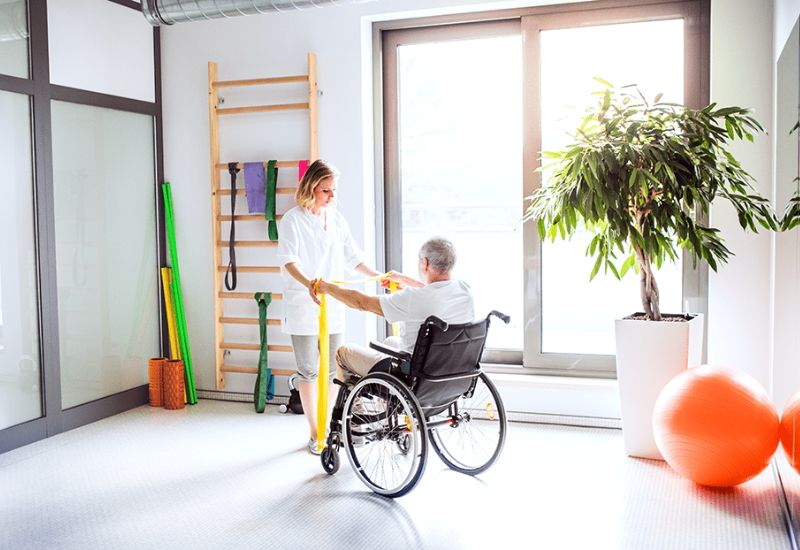
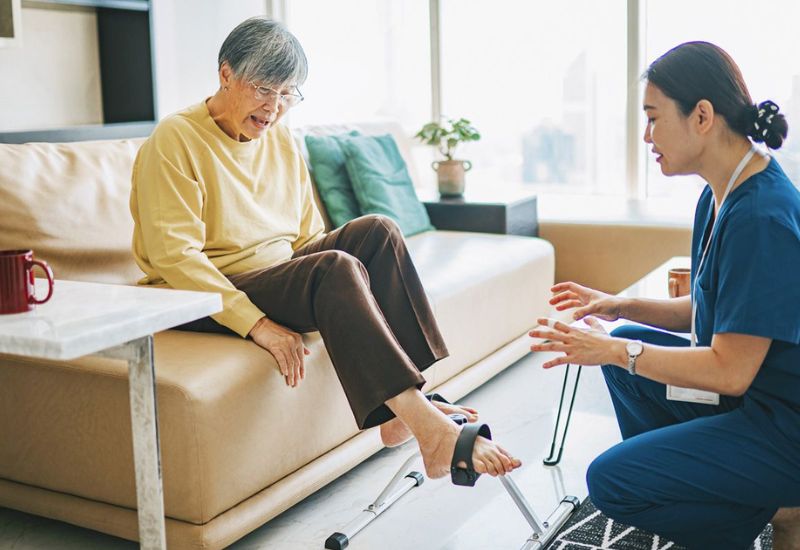
Numerous post-stroke rehabilitation exercises assist patients on their recovery journey. In general, rehabilitation activities focus on specific motor actions performed repetitively. Each patient’s personalized rehabilitation plan varies depending on the body part or specific skill set affected by the stroke.
Physical activities for rehabilitation include:
- Motor-skill exercises: Targeted exercises designed to improve muscle strength and motor coordination, including muscles utilized for balance maintenance and gait training.
- Mobility training: Exercises involving relearning how to use mobility aids, such as walkers, canes, wheelchairs, or ankle-foot orthoses (AFOs). An ankle-foot orthosis helps stabilize and support the ankle joint to bear body weight while relearning to walk.
- Range-of-motion therapy: Specific exercises and physical treatments aimed at reducing muscle spasticity and restoring joint range of motion.
Technology-assisted physical activities include:
- Functional Electrical Stimulation (FES): Electrical currents applied to weakened muscles, inducing contractions to help retrain neural pathways for muscle activation.
- Robotic technology: Robotic devices assist weakened limbs in performing repetitive movements, helping restore strength and motor function.
- Wireless technology: Wearable activity monitors help promote and track physical activity levels during post-stroke recovery.
- Virtual reality: Video games and computer-based therapies involving real-time interaction with simulated environments.
Cognitive and emotional rehabilitation activities include:
- Therapies for cognitive symptoms: Occupational therapy and speech-language therapy assist in addressing lost cognitive abilities, including memory retention, information processing, problem-solving, social interaction skills, judgment, and safety awareness.
- Communication therapies: Speech-language therapy helps restore lost capacities in speaking, listening, writing, and language comprehension.
- Psychological evaluation and treatment: Clinical psychologists assess emotional adjustment and provide targeted counseling or psychotherapy.
- Pharmacotherapy: Attending physicians may prescribe antidepressant medications or agents that influence alertness, agitation, or motor function.
Emerging rehabilitation therapies currently under investigation include:
- Non-invasive brain stimulation: Techniques such as Transcranial Magnetic Stimulation (TMS) have been utilized with research success in enhancing various motor skills.
- Biological therapies: Including stem cell therapy, which remains under active investigation and should strictly be utilized within clinical trial frameworks.
- Alternative medicine: Modalities such as therapeutic massage, herbal therapies, and acupuncture are undergoing ongoing scientific evaluation.
3. Key considerations in post-stroke rehabilitation
In addition to specific post-stroke rehabilitation exercises, several essential considerations govern the recovery process:
- Timing of initiation: The earlier stroke rehabilitation begins, the higher the likelihood of recovering lost abilities. Stroke rehabilitation typically starts as early as 24 to 48 hours post-stroke within the hospital setting.
- Duration of rehabilitation: The length of rehabilitation depends on stroke severity and associated complications. Many individuals require long-term rehabilitation spanning months or even years post-stroke.
- Rehabilitation plan adjustments: The care plan evolves throughout recovery as recovered skills advance and the patient’s individual needs change.
In summary, this article has outlined why post-stroke rehabilitation is necessary and what interventions are included in stroke rehabilitation programs. Stroke recovery can be a lengthy and challenging journey with hurdles along the way. Individual recovery trajectories vary, and post-stroke rehabilitation is neither a simple nor rapid process. However, with perseverance, determination, and a strong support network, patients and their families can make meaningful progress toward recovery.
In addition, an adjunctive therapy designed to enhance post-stroke recovery involves supportive solutions such as Red IV Laser Therapy. This supportive regimen aims to revitalize neuronal cells, facilitate more efficient neural function, and assist in improving cerebral ischemia. Red IV Laser Therapy is suitable for middle-aged individuals between 36 and 55 years of age. Advanced Red IV Laser technology utilizes intravenous laser light to reach individual cells throughout the body.
this mechanism, the technology helps optimize neuronal cellular function, promotes stable intravascular blood flow, and enhances tissue oxygen delivery. Red laser light also reduces inflammation and oxidative stress – effectively mitigating cellular strain and protecting tissue from potential damage. This plays a critical role in helping body cells maintain a healthy physiological state and proactively reducing the risk of other serious health conditions.
Data Sources: mayoclinic.org – mayoclinic.org – betterhealth.vic.gov.au
Bài viết của: Biên tập viên Drip Hydration